Websites & web applications
Content-rich websites, brand platforms, and browser applications. Publishing needs, responsive behavior, and purposeful visitor journeys guide the implementation.

Digital work takes many forms. We can create an experience for your customers, a tool for your team, or an interface that connects both to the systems behind the business. The starting point is a clear understanding of who needs it, what they need to do, and where the product has to live.
Content-rich websites, brand platforms, and browser applications. Publishing needs, responsive behavior, and purposeful visitor journeys guide the implementation.
Self-service experiences for accounts, information, and customer journeys, connected to the identity, data, and business services behind the product.
Reporting, status, and task interfaces shaped around the workflow. Help teams understand the information they need and the decision it supports.
Applications for approvals, administration, and coordinated work. Roles, integrations, and operational requirements are defined for the particular project.
Touch-oriented products for use away from a desk. Device capabilities, context, and platform requirements guide the experience from the start.
Applications and kiosk journeys for focused tasks. Input methods, display constraints, and the operating environment guide the interface and implementation.
A useful website starts with content people can maintain. We can connect your frontend to an existing CMS or help define the content architecture for a new one, considering the needs of both editors and visitors. The CMS choice should follow those needs, not dictate the experience.
Scope can include structured content models, reusable pages, editorial workflows, localization, previews, and migration. For larger digital experience platforms, we define which capabilities and integrations the project requires.
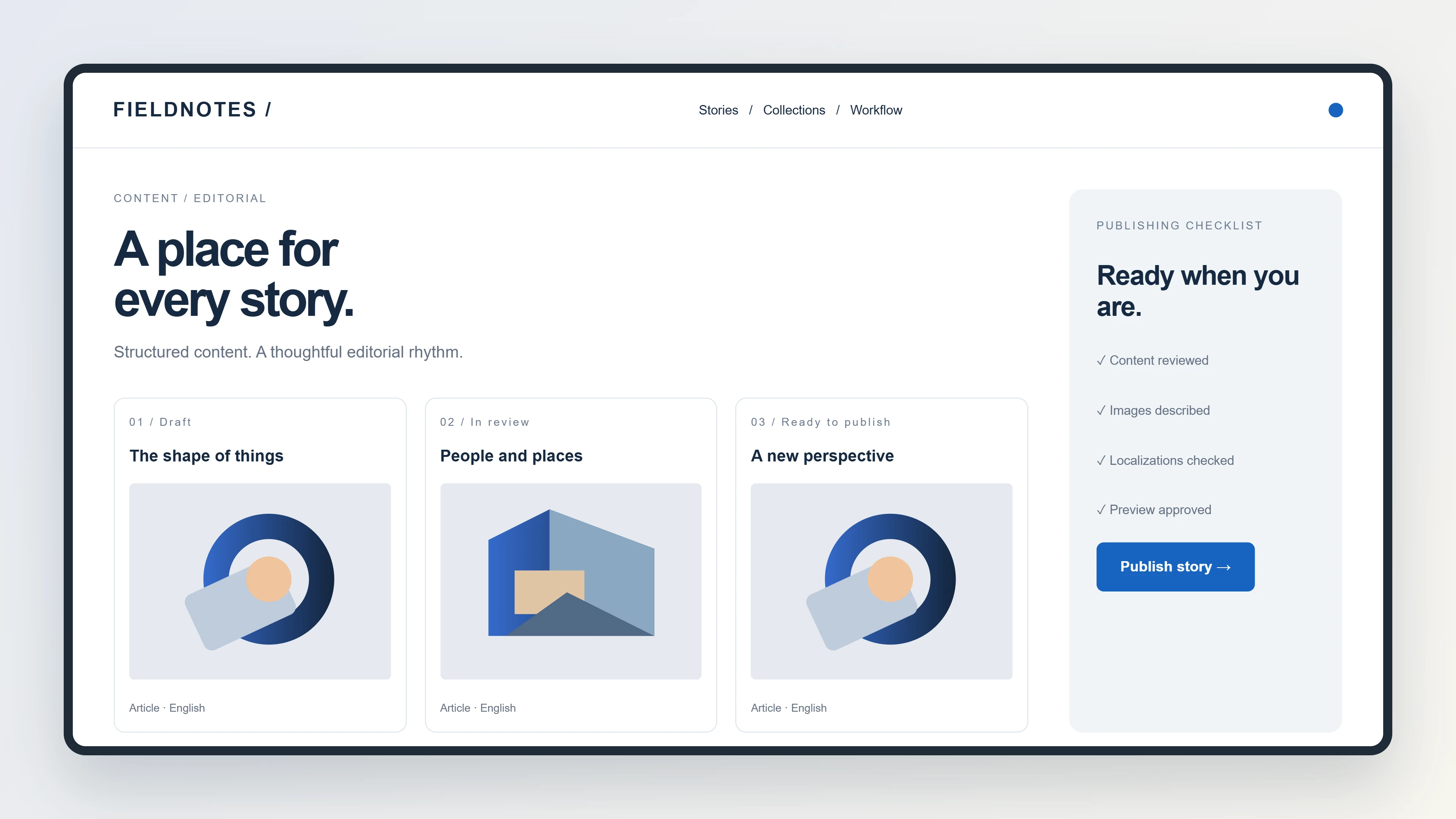
The storefront is only one part of the purchasing experience. Product information, search, content, account journeys, and checkout need to work together with the services behind them. We can design and implement that connection using an established commerce platform or a composable approach.
Projects can include product discovery, catalogs, checkout connections, and inventory or business-system integrations. We clarify where the platform owns behavior and where custom implementation is needed.

Complex business processes do not have to produce confusing interfaces. We can turn operational requirements into clear workflows, with practical attention to the different people, permissions, and systems involved. An effective application makes the task easier to follow without hiding essential information.
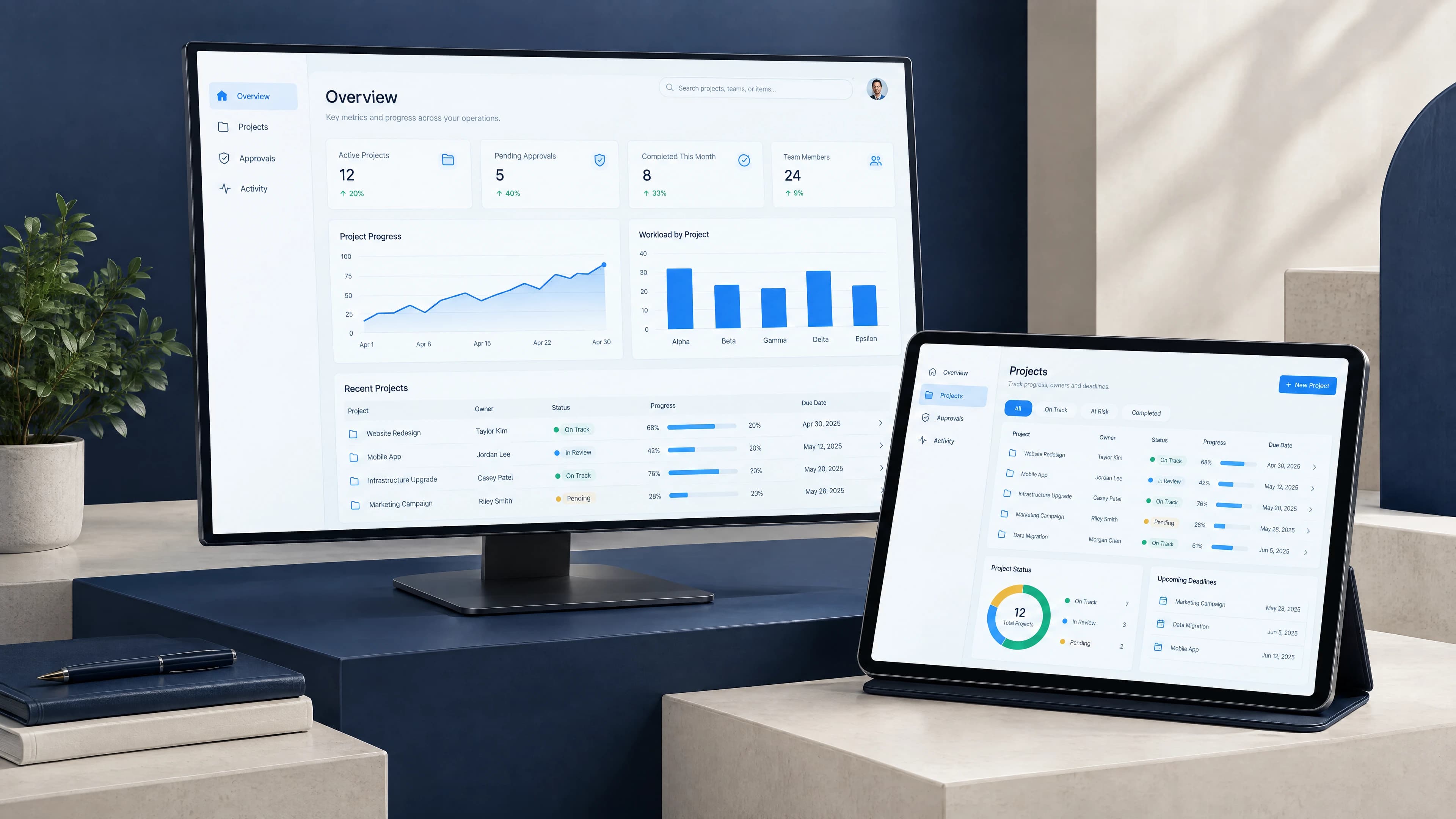
Define who can see information, complete an action, and review a result. Shape the interface and access model together, enforcing permissions in the appropriate services.
Connect status, decisions, and reporting in a coherent journey, including empty states, exceptions, history, and the information needed to move work forward.
Connect to the services supporting your business. Document interfaces, dependencies, and ownership so the product can be operated and changed deliberately.
Sign-in is part of the experience, but the identity architecture reaches much further. We can integrate account journeys, single sign-on, and role-based application access with a suitable provider. The model should reflect the audience and the systems that already manage their identity.
Registration, recovery, sessions, and account management follow the product’s needs. Workforce and customer identity require different approaches. Authorization rules are designed and enforced for the project.
A product needs a considered relationship with its data. We can define application models, connect APIs, and plan migrations so information arrives in the right place and in a useful form. The choice between relational, document, and managed services follows the way the product stores and uses information.
Scope can include service contracts, application data access, integration mapping, and migration validation. Define boundaries between interfaces, services, and stores, including how integration failures are handled.
Hosting is an operational decision as well as a technical one. We can deploy applications to Vercel, Netlify, Microsoft Azure, Google Cloud, or AWS services, or work with another suitable environment already used by your business. The destination follows the product’s requirements, dependencies, and ownership model.
Environment setup, deployment workflows, monitoring, and release documentation can be included. We define how releases are checked, who maintains the application, and what the operating team needs.

A consistent product does not need an identical interface everywhere. We consider what the person needs in each context: a quick task on a phone, a fuller view on a desktop, or a focused journey at a kiosk. Responsive design, platform behavior, and input methods are part of that work.
We can build around an existing framework or help select an approach, considering distribution, maintenance, and device capabilities. Platform-specific packaging and store preparation are scoped where required.

AI is part of our software development lifecycle, supporting exploration, prototypes, implementation, tests, and documentation. It helps us investigate possibilities; people remain responsible for the decisions and the quality of what we deliver.
Use AI to investigate alternatives, organize research, and accelerate experiments. Review generated suggestions against the brief and source material before they shape the product.
Support implementation, testing, and documentation while keeping architecture and acceptance decisions with people. Check outputs for correctness and fit with the product.
Apply the same quality expectations to assisted work. Consider project information, tool access, and data handling before choosing how AI participates in delivery.
The delivery approach connects the product experience with the technical foundation. Useful milestones make the decisions visible and let the team validate the work before release. The exact scope is agreed for the project, including the handover and any ongoing improvement.
Map audiences, journeys, existing services, and constraints. Define scope and an architecture that supports the required experience.
Test the important flows and interface direction in a reviewable form before implementation expands.
Build the interface, application behavior, and integrations in working increments, with regular opportunities for feedback.
Check requirements, supported devices, integration behavior, and failure states. Resolve the issues that would undermine the release.
Prepare the environment and release workflow, confirm the application’s behavior, and document the operating responsibilities.
Where ongoing work is in scope, use feedback and observed needs to prioritize the next changes.
Yes. We start by understanding the current architecture, integrations, and constraints. We can extend an existing product or discuss a migration where the reasons and risks are clear.
We can compare suitable options against editorial needs, product requirements, operational ownership, and existing systems. The named platforms are examples, not a required bundle.
Migration can be included in the scope. We review content, data, URLs, integrations, and release requirements before defining a transition and validation approach.

Bring us the product idea, the workflow, or the experience that needs to improve. We can discuss a practical starting point and the right combination of design, implementation, and integration work.
Playable experiences and interactive worlds for selected devices and platforms.
Explore games & interactive